All posts by random_curious_mind

Science Essays :D

“The complexity of the simplest known type of cell is so great that it is impossible to accept that such an object could have been thrown together suddenly by some kind of freakish, vastly improbable, event. Such an occurrence would be indistinguishable from a miracle.” 
― Michael Denton, Evolution: A Theory In Crisis

What are the perfect conditions for life to exist? Water, enough sunlight, organics?

Where would we find life? Exoplanets, moons?

Goldilocks Zone

A habitable zone is a region of space where conditions are best for life to form as on Earth. Planets in these areas are the most likely to have extraterrestrial life.

There are seven standards on the basis of which planets are evaluated:-

  • Earth Similarity Index (ESI) — Similarity to Earth on a scale from 0 to 1, with 1 being the most Earth-like. ESI depends on the planet’s radius, density, escape velocity, and surface temperature.
  • Standard Primary Habitability (SPH) — Suitability for vegetation on a scale from 0 to 1, with 1 being best-suited for growth. SPH depends on surface temperature (and relative humidity if known).
  • Habitable Zone Distance (HZD) — Distance from the center of the star’s habitable zone, scaled so that –1 represents the inner edge of the zone, and +1 represents the outer edge. HZD depends on the star’s luminosity and temperature and the size of the planet’s orbit.
  • Habitable Zone Composition (HZC) — Measure of bulk composition, where values close to zero are likely iron–rock–water mixtures. Values below –1 represent bodies likely composed mainly of iron, and values greater than +1 represent bodies likely composed mainly of gas. HZC depends on the planet’s mass and radius.
  • Habitable Zone Atmosphere (HZA) — Potential for the planet to hold a habitable atmosphere, where values below –1 represent bodies likely with little or no atmosphere, and values above +1 represent bodies likely with thick hydrogen atmospheres (e.g. gas giants). Values between –1 and +1 are more likely to have atmospheres suitable for life, though zero is not necessarily ideal. HZA depends on the planet’s mass, radius, orbit size, and the star’s luminosity.
  • Planetary Class (pClass) — Classifies objects based on thermal zone (hot, warm, or cold, where warm is in the habitable zone) and mass (asteroidan, mercurian, subterran, terran, superterran, neptunian, and jovian).
  • Habitable Class (hClass) — Classifies habitable planets based on temperature: very cold (< −50°C); cold; mesoplanets (M) = medium-temperature (0–50°C); thermoplanets = hot; very hot (> 100°C). Mesoplanets would be ideal for complex life, whereas class hP or hT would only support extremophilic life. Non-habitable planets are simply given the class NH.

Galactic habitable zone

  • It is not in a globular cluster where immense star densities are inimical to life, given excessive radiation and gravitational disturbance. Globular clusters are also primarily composed of older, probably metal-poor, stars. Furthermore, in globular clusters, the great ages of the stars would mean a large amount of stellar evolution by the host or other nearby stars, which due to their proximity may cause extreme harm to life on any planets, provided that they can form.
  • It is not near an active gamma ray source.
  • It is not near the galactic center where once again star densities increase the likelihood of ionizing radiation (e.g., from magnetars and supernovae). A supermassive black hole is also believed to lie at the middle of the galaxy which might prove a danger to any nearby bodies.
  • The circular orbit of the Sun around the galactic center keeps it out of the way of the galaxy’s spiral arms where intense radiation and gravitation may again lead to disruption.[

As our understanding of the universe expands, so too does our ability to identify and study these potential habitats for life. The advent of powerful new telescopes, like the James Webb Space Telescope, promises to enhance our ability to detect and analyze exoplanets in unprecedented detail. These instruments can reveal atmospheric compositions, surface conditions, and even potential signs of biological activity, such as the presence of specific gases like oxygen or methane that are often associated with life. Moreover, missions to moons like Europa and Enceladus, which harbor subsurface oceans beneath their icy crusts, could provide critical insights into the potential for life in environments vastly different from our own.

The search for extraterrestrial life is not just a quest for knowledge but also a profound journey to understand our place in the universe. It challenges us to look beyond our own world and consider the myriad possibilities that exist in the vast expanse of space. Whether we find microbes in the subsurface oceans of distant moons or detect the faint signals of an alien civilization, such discoveries would revolutionize our understanding of life and its potential to thrive in the cosmos. The pursuit of this knowledge drives scientific innovation and fosters a deeper appreciation for the delicate conditions that have allowed life to flourish on Earth. So, as we continue to explore the stars, we keep alive the hope that we are not alone and that somewhere out there, other forms of life are looking up at the sky with the same sense of wonder and curiosity.
Are we alone?

About 13.8 billion years ago, there was nothing..and then, bang! The universe was created. When the universe was only 200 million years old, it gave birth to stars. Slowly stars became very common in the universe. After many many years, our star, the head of our solar system, the Sun was born. The solar system was a violent place then. The mass emitted by the sun created small rocky bodies, one of which was the Earth. The Earth is a little over 4.5 billion years old, with its oldest materials being 4.3 billion-year-old zircon crystals. To date, we have no evidence as to how life came into being. Theories say that bacteria were brought to the earth by an asteroid, some say that it was aliens who ruled the planet and left it after mass destruction, whereas some theories say that there was a chemical reaction between water and organic elements (which created amino acids) on being hit by lightning.

Unicellular cells developed to form complex organisms like us which had the ability to think and reason. As there was a development in education and space sciences, one major thought kept hitting everyone’s mind – “Are we alone?”. The Universe is a huge place. It is a waste of space if we’re the only ones living in it. Come on.. there have to be aliens right?

There are about 100,000,000,000 galaxies in the known universe. Each galaxy has 100,000,000,000 to 1,000,000,000,000 stars. Planets also appear to be common in every solar system observed so far. The milky way itself has 400 billion stars i.e. 10,000 stars for every single grain of sand on earth! Then why have we not been contacted by aliens till now?

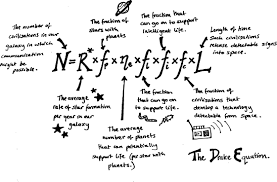
Drake’s Equation and Fermi Paradox

Image Source; Image Credit: (??)

drake equation

The Drake Equation is:
N = R * fp * ne * fl * fi * fc * L

where:
N = The number of broadcasting civilizations.
R = Average rate of formation of suitable stars (stars/year) in the Milky Way galaxy
fp = Fraction of stars that form planets
ne = Average number of habitable planets per star
fl = Fraction of habitable planets (ne) where life emerges
fi = Fraction of habitable planets with life where intelligence evolves
fc = Fraction of planets with intelligent life capable of interstellar communication
L = Years a civilization remains detectable

You see, it’s so easy to calculate the number of alien civilizations in our galaxy! Hahaha..just kidding. The Drake Equation appears extremely pleasing on a piece of paper but is unrealistic (according to me). So do we conclude that we’re alone? Not so early.. We are probably forgetting about The Fermi Paradox.

The Fermi paradox is named after physicist Enrico Fermi, which is the apparent contradiction between the lack of evidence and high probability estimates for the existence of extraterrestrial civilizations. It is a conflict between probability and evidence. It also states that we could be protected under a shield that does not allow us to contact other intelligent beings.

WOW! Signal

Are we alone? Do aliens exist? These are some questions which keep bugging us all the time. In the late 1900s, technology was developed enough to give scientists a sense of confidence about extraterrestrial life.

How strange would it be if there were aliens? “We are alone” and “There’s somebody out there” are two possibilities, each equally scary. To address this major dilemma, scientists initiated a project called SETI—the Search for Extraterrestrial Intelligence—in 1997. The purpose of this mission is to send and receive radio signals from intelligent life in deep space. Beyond SETI, numerous other radio telescopes have been searching for similar signals.

In 1959, Cornell physicists Philip Morrison and Giuseppe Cocconi speculated that any extraterrestrial civilization attempting to communicate via radio signals might use a frequency of 1420 megahertz. This frequency is naturally emitted by hydrogen, the most common element in the universe, and therefore likely familiar to all technologically advanced civilizations. In 1973, after completing an extensive survey of extragalactic radio sources, Ohio State University assigned the now-defunct Big Ear telescope to SETI.

On August 15, 1977 The Ohio State University’s Big Ear Telescope received a weird signal which couldn’t have been created naturally. The signal appeared to come from the constellation Sagittarius and bore the expected hallmarks of extraterrestrial origin. Astronomer Jerry R. Ehman discovered the anomaly a few days later while reviewing the recorded data. He was so impressed by the result that he circled the reading on the computer printout and wrote the comment Wow! on its side, leading to the event’s widely used name.

The Signal

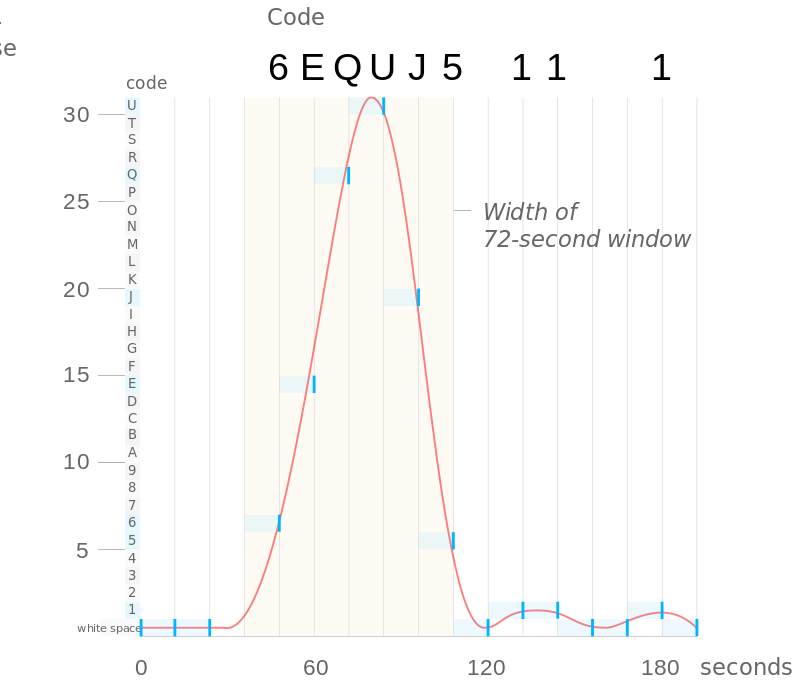
The entire signal sequence lasted for the full 72-second window during which Big Ear was able to observe it, but has not been detected since, despite several subsequent attempts.Wow_signal_profile.svg

This represents the intensity variation of the radio signal over time, measured as unitless signal-to-noise ratio. A common misconception is that the Wow! signal constitutes some sort of message. In fact, what was received appears to be an unmodulatedcontinuous wave signal with no encoded information; essentially a flash of radio energy.

Two different values for the signal’s frequency have been given: 1420.36 MHz (J. D. Kraus) and 1420.46 MHz (J. R. Ehman), both very close to the value of 1420.41 MHz of the hydrogen line.

Hypothesis

  1. Interstellar scintillation of a weaker continuous signal : This basically means that the signal might not be real but an illusion like the twinkling of stars.
  2. Reflected signal : An earth sourced signal could have been reflected by some debris in space.
  3. Hydrogeb could surrounding two comets : Antonio Paris proposed that the hydrogen cloud surrounding two comets, 266P/Christensen and 335P/Gibbs, now known to have been in roughly the right position, could have been the source of the Wow! signal.

Well, the signal couldn’t be replicated again and there is no definite information about its source. Could they be aliens? Nobody knows!

These efforts are driven by the profound curiosity and desire to answer one of humanity’s oldest questions: Are we alone in the universe? The discovery of extraterrestrial intelligence would revolutionize our understanding of our place in the cosmos, while the confirmation of our solitude would deepen the mystery of life’s origins on Earth. Regardless of the outcome, the quest to find intelligent life beyond our planet continues to inspire scientific innovation and exploration.

Space Missions and Experiments

“We choose to go to the Moon! … We choose to go to the Moon in this decade and do the other things, not because they are easy, but because they are hard; because that goal will serve to organize and measure the best of our energies and skills, because that challenge is one that we are willing to accept, one we are unwilling to postpone, and one we intend to win ” On September 12, 1962, President John F. Kennedy delivered a speech about the effort to reach the Moon, to a large crowd gathered at Rice Stadium in Houston, Texas.

Usually, wars are destructive, capable of wiping out not only castles from hills and grains from fields but also humanity from humans. However, when it comes to a Cold War, the outcomes can be different. The technological and scientific race between the USA and the USSR during the Cold War led to significant advancements in space exploration.

In 1957, the USSR launched the first satellite, Sputnik, into orbit, prompting President Eisenhower to establish NASA. However, it took about four months for the US to launch its first satellite, and there were several embarrassing failures along the way. In 1961, Soviet cosmonaut Yuri Gagarin became the first man in space. A little over three weeks later, the US launched Alan Shepard into space.

This Cold War competition between the USA and the USSR led to the formation of one of the most successful and recognized space organizations in today’s world—the National Aeronautics and Space Administration (NASA). This rivalry spurred unprecedented advancements in technology and exploration, culminating in remarkable achievements such as the Apollo moon landings and the development of the Space Shuttle program. The legacy of this space race continues to inspire and drive innovations in space exploration today.

Why space exploration? Because humans are not meant to settle on a single piece of land. Homo sapiens is part of a group called hominids, which were the earliest humanlike creatures. As per archaeological and anthropological evidence, we think that hominids diverged from other primates somewhere in eastern and southern Africa. But we didn’t stay there, not all of us! Over a few centuries,, our ancestors walked all over the continent, and then out of it. That is the reason why we look up at the night sky. We dream we imagine, and we aspire to go to the moon, to travel across stars at the speed of light.

Space exploration began way before we realized it actually did. The very primitive stage was the invention of a telescope in 1610. ‘Treatise on the Motion of Rockets’ by William Moore in 1813 and advanced (obviously not as advanced as now) astrophotography in 1840 were the pioneers of space exploration which motivated leaders to plan and announce missions. The International Space Station hosts 6 astronauts at a time who perform various experiments.

Along with astronomy we collect information on animal biology, human psycologogy, chemistry, geology, etc every single day. That is what makes space exploration special!

Theories and Paradoxes

WARNING: Major Interstellar Spoilers Ahead

Due to the excessive pollution in cities, it’s tough to spot stars. When I was in school, even the few sparkling dots in the sky were enough to make me forget all my worries. I could spot the Orion constellation and Sirius from my balcony. Venus and the ISS flyby used to be the icing on the cake. As famously stated by Plato, “astronomy compels the soul to look upwards and leads us from this world to another.” I used to enjoy the night sky often, but for some unknown reason, I stopped—until I watched Interstellar.

I had watched multiple YouTube videos, read tons of articles, and knew about 4-dimensional geometry, yet I was left dumbfounded when I watched Interstellar. Unfortunately, I had already encountered spoilers. I knew that higher dimensions were involved, but Christopher Nolan managed to astound me with the tesseract. Interstellar took the filmmaker’s usual Rubik’s cube narrative structure and blended in a hearty dose of astrophysics, completely baffling the audience. Cooper gets NASA’s coordinates from ‘them,’ and that’s where his journey begins. Before Cooper departs for his mission, Murph tells him that she has decoded a Morse code message communicated via her bookshelf, which reads: “STAY.” In the end, we’re brought back to the same room, the same time, the same message but in a higher dimension. Cooper gave himself the coordinates. Cooper brought himself there. If Cooper hadn’t given the coordinates, how would he have gotten there? And remember the handshake at the end? Cooper was the ghost; Cooper was ‘them’. All of this is so confusing, isn’t it? It’s a paradox!

A paradox is “a seemingly absurd or contradictory statement or proposition which, when investigated, may prove to be well-founded or true.” The infinite hotel is a paradox. A boy traveling to the past to kill his grandfather is a paradox. A twin coming back home to meet his sibling after a flyby around a black hole, only to find himself younger than his twin, is a paradox.

Let’s travel 13.8 billion years backward to the moment of the Big Bang, when time and space sprang into existence out of literally nothing. Or consider light—is it a particle or a wave? Why can’t we determine the position and momentum of an electron simultaneously? Are these paradoxes as well? No, they aren’t.

The evolution of the universe is a theory, whereas the principle stating that we cannot simultaneously determine the momentum and position of an electron is the Heisenberg Uncertainty Principle. A hypothesis or a theory is either a suggested explanation for an observable phenomenon or a reasoned prediction of a possible causal correlation among multiple phenomena. The major difference between a scientific law and a scientific theory is that theories are huge, complex structures with ragged edges that would take a book to describe, whereas a law or a principle has been experimentally verified and can be written in a single sentence.

So this is what we’ll be discussing in the following posts: String Theory, the Big Bang Theory, Newton’s (rejected) Corpuscular Theory, the Duality Principle, Gravity, and much more. A quick suggestion—if you haven’t watched Interstellar, go and watch the movie right now!

Keep looking up!

Astrophysics

In the beginning, there was eternal darkness. And then, bang! An explosion brought forth an endlessly expanding existence of time, space, and matter. Every day, we discover something new, further than ever imagined, beyond the limits of our existence.

Our universe is a magically unbound expanse of space and time brimming with endless possibilities. Imagine a theoretical tunnel providing shortcuts through space and time, or a three-dimensional hole pulling in all light. Picture blue balls of fire undergoing nuclear fusion, becoming heavier, expanding into red giants, and finally exploding due to a collapse under their own weight.

But before venturing into outer space, we must understand science. “Science is a body of knowledge and a method of how we learned that knowledge.” Science teaches us that our assumptions might be incorrect. We need to observe the universe, scrutinize every phenomenon, and make educated guesses about what is happening and why, to uncover the answers.

Understanding the universe requires curiosity and systematic study. We must embrace the scientific method, which involves making observations, forming hypotheses, and conducting experiments to test our theories. This approach allows us to peel back the layers of the unknown, gradually revealing the intricate workings of the cosmos. Through science, we can comprehend the forces that shape the stars, the planets, and the very fabric of reality itself.

In essence, science is our guiding light in the vast darkness of the unknown, enabling us to explore and understand the universe’s profound mysteries. Through diligent study and relentless curiosity, we can unlock the secrets of existence, continually pushing the boundaries of what we know and expanding our understanding of the cosmos.

I know that I am standing on a surface that appears flat but is, in fact, round. This sphere, our Earth, has a metallic core and is enveloped by a fuzzy atmosphere. It is surrounded by a magnetic field that protects us from the constant barrage of subatomic particles from the sun, which is 150 million kilometers away and the strongest source of light, reaching our planet in just eight minutes. This light also illuminates the days of other planets, comets, and asteroids in the main asteroid belt and the Kuiper Belt, which can be considered the outer boundary of our solar system, extending through the Oort Cloud into interstellar space filled with gas clouds and dust lanes. We locate ourselves on one of the outer arms of the Milky Way Galaxy, which has a supermassive black hole at its center. There are millions of such galaxies drifting away from each other due to the expansion of our universe, a phenomenon explained by dark matter and dark energy.

This is what we have learned after decades of intensive research in the field of astronomy. However, it is not just astronomy alone that has provided this information. Astronomy is the study of celestial bodies, their positions, and phenomena such as eclipses and the phases of the moon. It is like an advanced version of stargazing. Observing planets is part of astronomy. But, if we send rovers to a planet, is that still astronomy? We have sent Curiosity to Mars, Juno to Jupiter, and Cassini to Saturn. Curiosity is conducting geology, metallurgy, chemistry, image processing, and almost everything except traditional astronomy. Thus, according to the modern definition, astronomy encompasses everything observed and experimented on beyond Earth’s atmosphere.

Now, you might ask why it is so important to study this field of science. Astronomy has led to revolutions in almost every field. Let’s go back in time, even before telescopes were invented. What did people see then? They clearly knew they lived in a place that seemed stationary while the sky appeared to move. They saw the sun rising and setting, so geocentrism seemed perfectly correct at that time. However, over time, people learned that the sun is the center of the solar system.

The invention of the telescope marked a significant milestone. Galileo and Newton made significant improvements to it. Newton also developed calculus and Newtonian mechanics to understand the behavior of moving planets. As a result, our knowledge of mathematics, physics, and chemistry improved. Then came another revolution: photography. We could capture much fainter objects on photographic plates. Today, we use computers to analyze images taken by telescopes. Over time, astronomy has opened doors to many more branches of study, which aren’t strictly astronomy but are closely connected.

Many people are unaware that Astronomy, Astrophysics, and Cosmology are three distinct but closely related branches of science. Astronomy is the study of celestial bodies, their positions, and their motions in space. Astrophysics, on the other hand, applies principles and laws of physics, chemistry, and mathematics to understand the nature and behavior of these bodies. For instance, Astronomy tells us about the existence of a star system called Trappist-1, approximately 40 light-years away. Astrophysics, however, informs us that the planets in this system have solid surfaces and may be tidally locked to their star, meaning the same side of the planet always faces the star, resulting in perpetual day on one side and perpetual night on the other. This could lead to weather patterns vastly different from those on Earth, such as strong winds blowing from the day side to the night side and extreme temperature changes.

Cosmology is the study of the universe as a whole. It encompasses topics like the Big Bang, dark energy, and the cosmic microwave background. Cosmology relies more on logic and reasoning than on direct observation and analysis. It seeks to understand the large-scale properties of the universe and its origins, structure, evolution, and ultimate fate.

About a century ago astrology was also a science. Astrologists looked into the night sky to predict the positions of planets and expressed how they affected our lives. What we do not realize is that the night sky is changing. The position of our earth in the milky way is not where it was a hundred years ago. The constellations are changing. Thus in today’s date astrology is more like a pseudo science.

It’s not just scientists who enjoy the pleasure of studying astronomy; everyone can become an amateur astronomer with some basic knowledge. We are all born scientists, and curiosity is a fundamental part of being human. Astronomy encompasses several categories: simulation/computation, observation, theoretical physics, and experimental physics. Theoretical physics involves applying laws and equations to prove new theories and is notoriously challenging. Experimental physics often requires large and expensive apparatus. However, observation is something everyone can engage in!

Take William Herschel, for example. A classically trained musician, he became an amateur astronomer who discovered Uranus and was the first to observe binary star systems. With a good amateur telescope, you can observe changes in the sky and report your findings to an astronomical society. Significant discoveries can earn you recognition. Thomas Bopp and Carolyn Shoemaker are notable amateurs who made significant contributions, discovering 32 comets, 377 minor planets, and 800 asteroids!

For those without a telescope, many citizen science organizations allow you to analyze their data using your computer. NASA frequently offers opportunities for public participation. For instance, the JunoCam project invites everyone to analyze and process images taken by the Juno probe.

Astronomy is an accessible and exciting field for anyone with a curious mind. Whether through direct observation with a telescope or participating in citizen science projects, everyone has the potential to contribute to our understanding of the universe.

Particle Physics

Science has always played a major role in every period of human evolution. Back in 460 BC people performed primary occupations such as farming, fishing, cattle rearing etc. along with a few jobs involving technical and scientific knowledge to full fill the needs of the army. Their educational curriculum, at that point of time was all about natural sciences. While the world was learning to get a good yield in their fields, Greeks were studying philosophy, mathematics and astronomy. One of them was Democritus, a natural philosopher. He was taught about the five elements of nature – air, water, fire, earth and ether (matter that made up the sun and moon). He wasn’t convinced with this theory. He said that there are particles which are extremely small which make up the world. He named them atomos – indivisible. This was the beginning of particle physics.

Atomic Theories

According to Democritus, atoms were indestructible, solid but invisible and homogeneous. Sounded good but incomplete. With the development in scientific research and technology various ideas came up to explain the building blocks of nature.

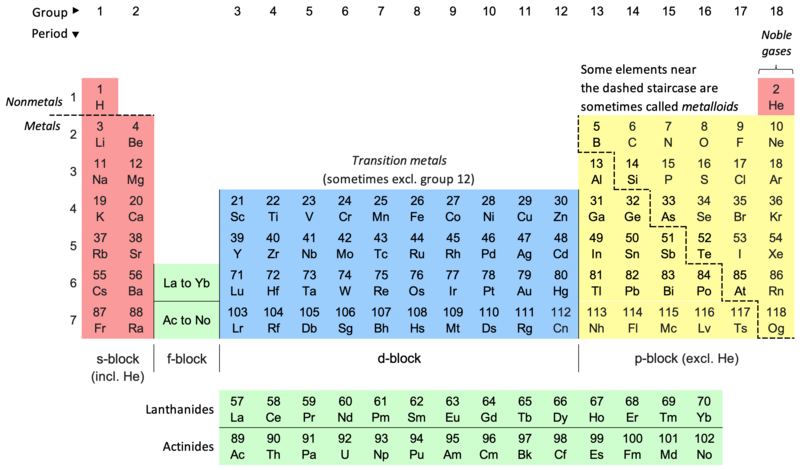
periodic tableIn the late 1800s scientists thought the universe was made up of just 80 elements which were placed systematically in the periodic table by Mendelev. Was each element made up of a different type of atom? Were there 80 different atoms?
J.J. Thomson was the first to propose a coherent atomic theory. He is also credited with conceptualizing an apparatus resembling a modern-day particle accelerator. By varying the voltage across plates and measuring the deflection of beams, Thomson calculated the mass of particles. He discovered that these particles were 2000 times lighter than hydrogen atoms, the lightest known particle at the time. This unknown particle was the electron, the first fundamental particle identified. Remarkably, even a century later, electrons remain one of the best-measured particles. Thomson’s findings led to the first atomic model, known as the “Raisin Pudding” model, where the atom was envisioned as a positively charged “pudding” with embedded negatively charged electrons.

Next came Ernest Rutherford, who utilized beams of radioactive decay. His work area still bears traces of radioactivity, even a century after his experiments. Rutherford directed a beam of particles at a thin gold foil. Most particles passed through, some deflected at small angles, but a few (precisely 1 in 8000 alpha particles) bounced back. It took Rutherford two years to realize that the atom has a nucleus at its center, which is extremely small but accounts for 99% of the atom’s mass. The remainder is mostly empty space. This led to a new atomic model, akin to our solar system, with a central nucleus and orbiting electrons. Rutherford and James Chadwick later discovered that the nucleus comprised positively charged protons and neutrally charged neutrons.

Modern-day particle physics

With the development of quantum mechanics, we now understand that while the nucleus resides at the center of an atom, the precise positions of electrons within their respective distinct shells cannot be predicted. Electrons exist in probabilistic clouds rather than fixed orbits.

Around the 1900s, scientists discovered unknown particles bombarding the Earth, originating from cosmic rays. Determining the exact time and location of these cosmic ray particles was challenging. To study them, scientists developed their own particle accelerators. In just a few decades, this led to the discovery of about 80 new fundamental particles, reminiscent of the chaotic period during Mendeleev’s time.

Amidst this chaos, Murray Gell-Mann identified patterns explained through symmetries. He proposed that the entire array of approximately 80 fundamental particles was composed of three basic particles, which he called quarks (up & down in this context). This groundbreaking realization brought a new level of order and understanding to the field of particle physics, highlighting the elegant simplicity underlying the apparent complexity of the subatomic world.

Image result for standard model of particle physics

Forces, the agents of change, are crucial for understanding the standard model of particles. Gravity, the force that made an apple fall, was the first to be discovered. However, it is relatively weak and thus does not occupy a place in this model. This is because gravity is theorized to be mediated by a particle known as a graviton, which has yet to be discovered. Importantly, ignoring gravity at quantum scales does not affect experimental outcomes.

The force that holds soap bubbles together and allows a flame to burn is the same force that enables us to push and pull objects, powers electronic devices, and gives us a view of the beautiful universe—the electromagnetic force. This force holds atoms in place within objects and keeps electrons in place within atoms. It also causes electrons to repel each other. Thus, when you hold a ball in your hand, gravity pulls it down, but the electrons in your hand repel the electrons in the ball, preventing it from falling through your hand. The photon is the particle responsible for the electromagnetic force. There’s much to discuss about its wave-particle duality, the photoelectric effect, quantum electrodynamics, and more.

Protons, which are positively charged, exist within the same nucleus. According to electromagnetism, they should repel each other and cause the nucleus to blow apart, yet they remain stable due to another force: the strong nuclear force. This force keeps the nucleus intact. Despite understanding the effects of the strong nuclear force, certain phenomena remained unexplained, necessitating the discovery of another force—the weak force. The gluon mediates the strong force, while the W and Z bosons represent the weak force. Interestingly, scientists observed that electrons are emitted from the nucleus during beta decay, a process explained by the weak force.

These forces—electromagnetic, strong nuclear, and weak nuclear—form the foundation of the standard model of particle physics, explaining the interactions and behaviors of fundamental particles.

¯\_(ツ)_/¯

Positrons are electrons with positive charge which are emitted from the nucleus during ß decay. Rico Fermi later explained that there was a weak force which could convert proton into neutron or neutron into proton and emit electrons, positrons or neutrinos from the nucleus !! With this, we can now understand the working of the atoms.

So is this the end? No ⊙﹏⊙

The Electroweak Force – combination of the weak force and electromagnetism (which is already a combination of electricity and magnetism) !!

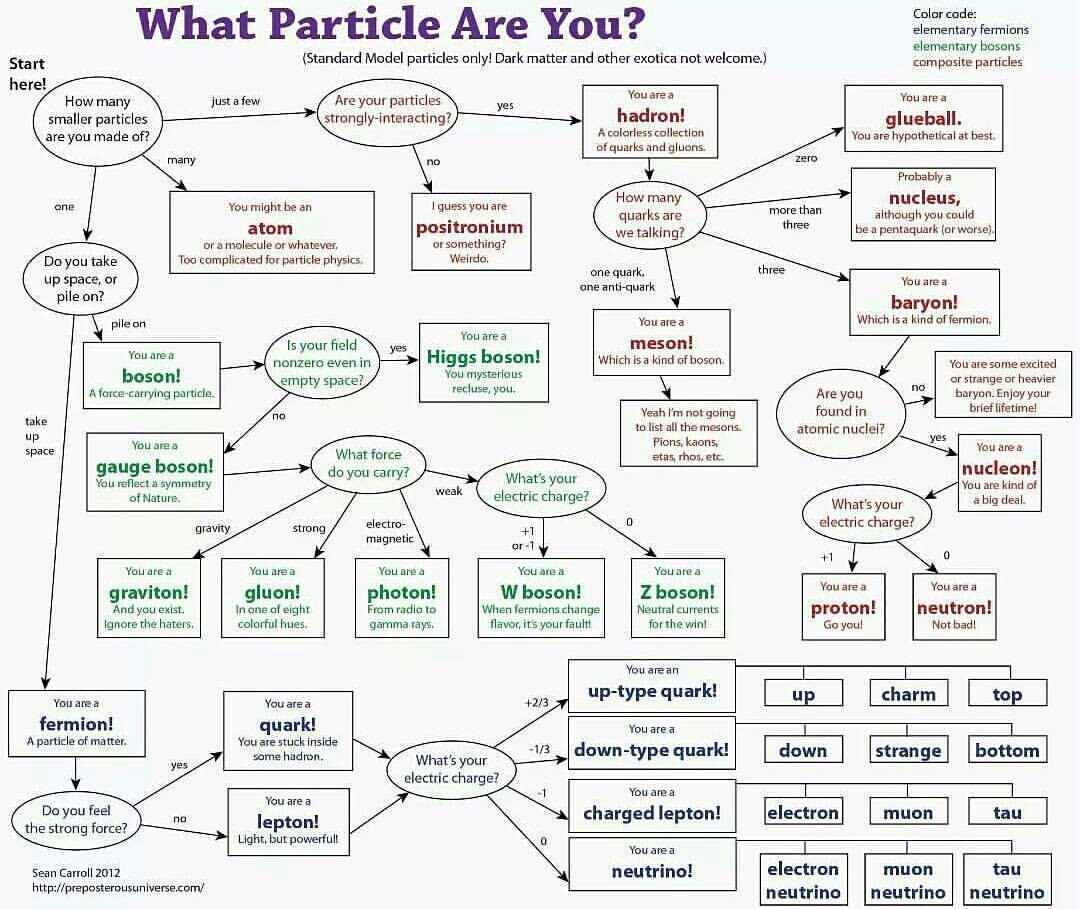
This is the end of the post but there are more particles to come and blow your mind. What particle would you want to be? I’m definitely Higgs Boson–the god particle :p

particles

Images Used
1. “Periodic Table of Elements“; Credit: Sandbh
2. “Standard Model of Elementary Particles“; Credit: Cush
3. “What Particle are you?“; Credit: Sean Carroll