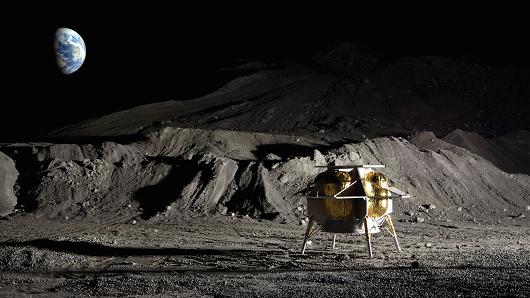
“We choose to go to the Moon! … We choose to go to the Moon in this decade and do the other things, not because they are easy, but because they are hard; because that goal will serve to organize and measure the best of our energies and skills, because that challenge is one that we are willing to accept, one we are unwilling to postpone, and one we intend to win ” On September 12, 1962, President John F. Kennedy delivered a speech about the effort to reach the Moon, to a large crowd gathered at Rice Stadium in Houston, Texas.
Usually, wars are destructive, capable of wiping out not only castles from hills and grains from fields but also humanity from humans. However, when it comes to a Cold War, the outcomes can be different. The technological and scientific race between the USA and the USSR during the Cold War led to significant advancements in space exploration.
In 1957, the USSR launched the first satellite, Sputnik, into orbit, prompting President Eisenhower to establish NASA. However, it took about four months for the US to launch its first satellite, and there were several embarrassing failures along the way. In 1961, Soviet cosmonaut Yuri Gagarin became the first man in space. A little over three weeks later, the US launched Alan Shepard into space.
This Cold War competition between the USA and the USSR led to the formation of one of the most successful and recognized space organizations in today’s world—the National Aeronautics and Space Administration (NASA). This rivalry spurred unprecedented advancements in technology and exploration, culminating in remarkable achievements such as the Apollo moon landings and the development of the Space Shuttle program. The legacy of this space race continues to inspire and drive innovations in space exploration today.
Why space exploration? Because humans are not meant to settle on a single piece of land. Homo sapiens is part of a group called hominids, which were the earliest humanlike creatures. As per archaeological and anthropological evidence, we think that hominids diverged from other primates somewhere in eastern and southern Africa. But we didn’t stay there, not all of us! Over a few centuries,, our ancestors walked all over the continent, and then out of it. That is the reason why we look up at the night sky. We dream we imagine, and we aspire to go to the moon, to travel across stars at the speed of light.
Space exploration began way before we realized it actually did. The very primitive stage was the invention of a telescope in 1610. ‘Treatise on the Motion of Rockets’ by William Moore in 1813 and advanced (obviously not as advanced as now) astrophotography in 1840 were the pioneers of space exploration which motivated leaders to plan and announce missions. The International Space Station hosts 6 astronauts at a time who perform various experiments.
Along with astronomy we collect information on animal biology, human psycologogy, chemistry, geology, etc every single day. That is what makes space exploration special!
 random curious mind !